
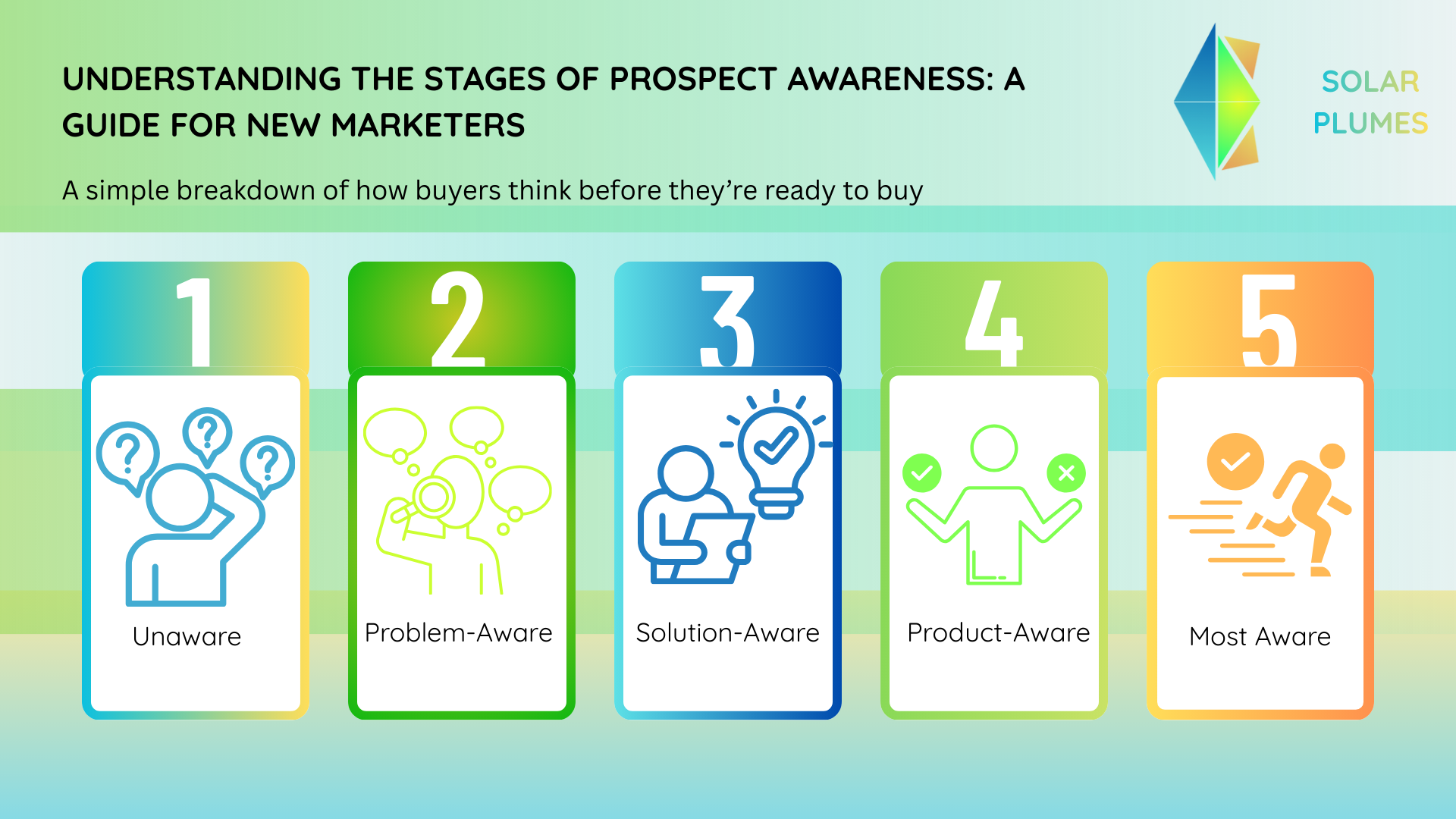
The concept of prospect awareness was developed by Eugene Schwartz. It is a marketing framework that categorizes potential customers into five stages based on how aware they are of a problem and the solutions available. Simply put, it helps marketers understand what people are thinking before they take action, and why the same message doesn’t work for everyone.
Why marketers need to know about prospect awareness?
Marketer, whether small or large, need to understand prospect awareness because not all audiences think the same way, regardless of business size. Large brands often deal with a wide audience at different awareness stages, while smaller businesses usually have limited resources and need to be more precise with their messaging.
Understanding these stages helps marketers create content that matches the reader’s mindset instead of pushing messages they’re not ready for. This is where the five stages of prospect awareness become useful.
The 5 Stages of Prospect Awareness
1. Unaware Stage
Prospects at this level do not yet realize they have a problem. Because of this, marketers would not sell directly to them. Instead, campaigns first introduce the pain point, then transition into a lead magnet that positions itself as the solution.
Unaware prospects do not yet recognize the real problem they have. They only notice the symptoms such as low website inquiries, declining engagement, or poor results, without understanding the underlying cause. Because of this, direct selling does not work at this stage. The goal is not to sell immediately, but to move the prospect from being unaware to recognizing their problem.
The visual below demonstrates how an unaware prospect thinks (left), and how an effective awareness-stage ad speaks to them (right).
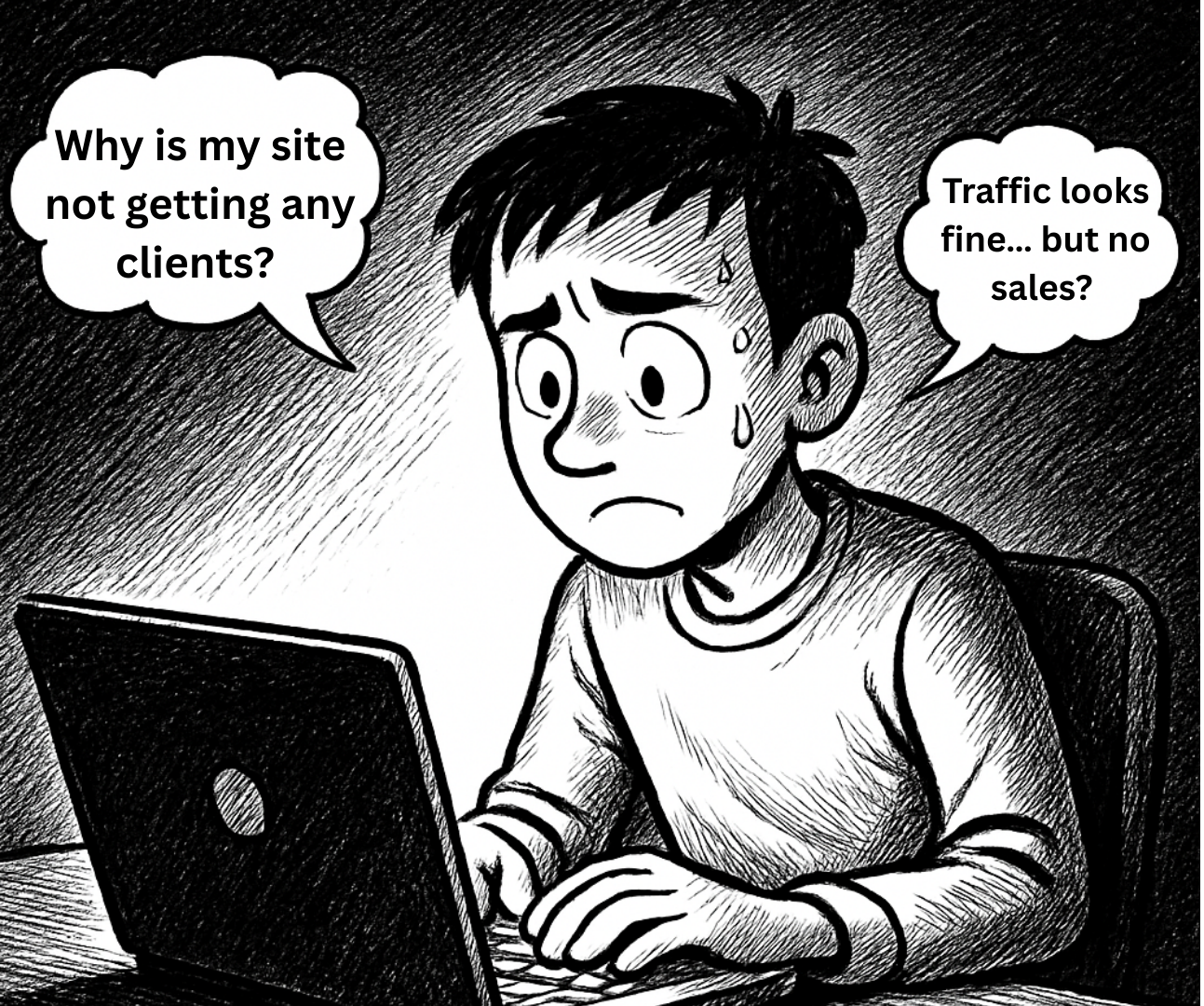
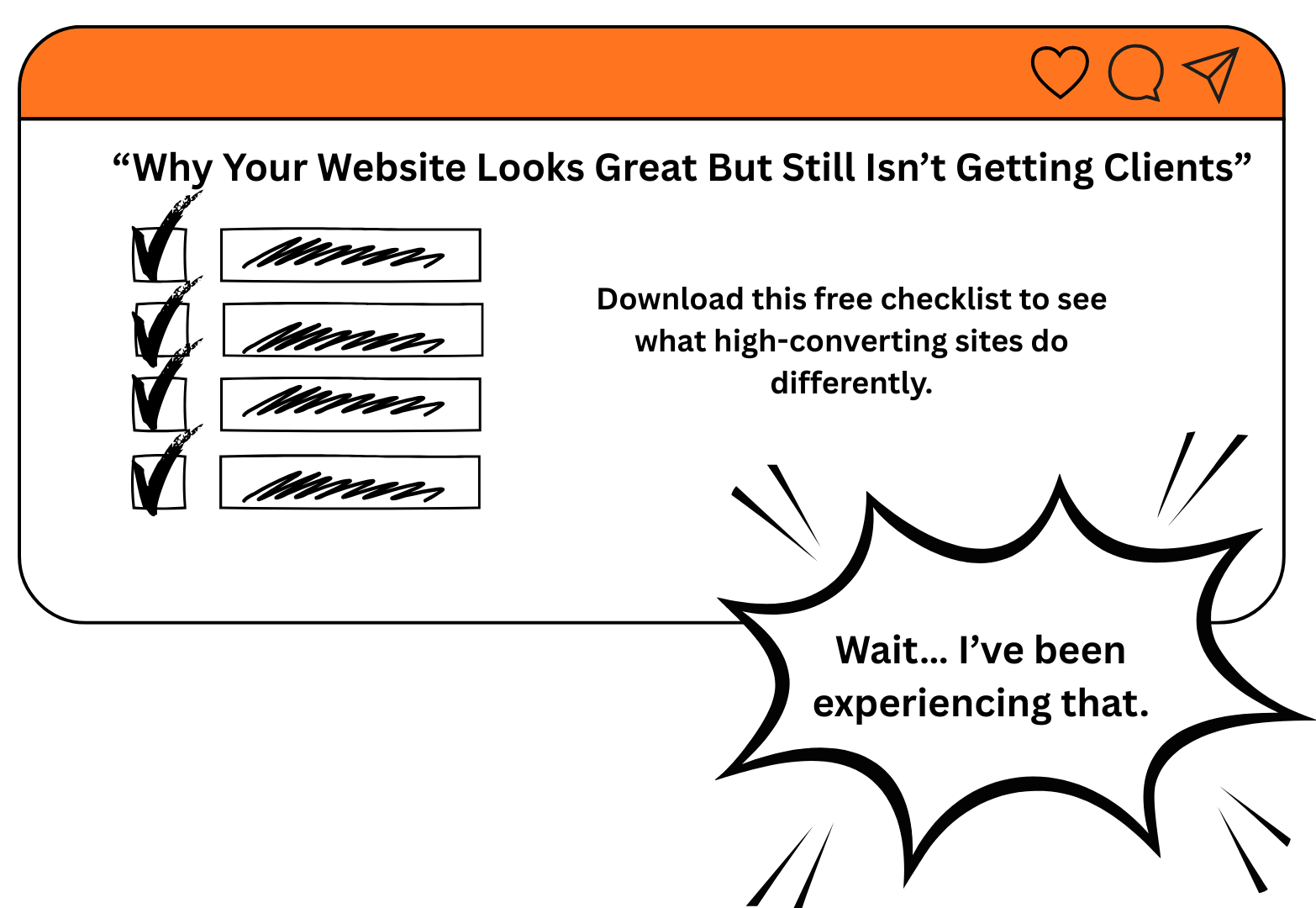
When unaware prospects see an awareness-stage ad, their typical reaction is curiosity, not an immediate action.
They relate to the symptoms described, begin recognizing the real problem, and are more likely to engage with an educational lead magnet rather than a direct product offer.
So instead of selling a product right away, focus on the everyday experiences or frustrations your prospects are already feeling. The goal at this stage is to help them recognize that a problem exists before introducing any solution.
2. Problem-Aware Stage
At this stage, an unaware prospect has finally recognized that a problem exists. This means they are no longer guessing or feeling vague frustration-they now understand what is actually wrong. However, they still don’t know what solutions are available or which one is right for them.
This is the transition point where prospects move from: “I feel something isn’t working” to “I now know what my problem is.”
Problem-aware ads don’t sell the product yet - they connect the problem to the right type of solution.
The visual below illustrates how a problem-aware prospect thinks, and how an effective problem-focused ad aligns with that mindset.


When problem-aware prospects encounter an ad, they typically feel understood and validated. Rather than resisting, they become curious and are more willing to engage with educational content that promises clarity and direction toward a solution.
In the visual above, the prospect represents someone who is already problem-aware. They are no longer guessing what is wrong - they clearly recognize their challenge. Their thoughts focus on the specific issue they’re facing, such as low conversions, weak engagement, or inconsistent results.
Unlike an unaware prospect, who only feels confusion or frustration without knowing the cause, a problem-aware prospect already understands what the real problem is. They just don’t yet know what solution can fix it.
3. Solution-Aware Stage
Instead of introducing the problem, it acknowledges the issue the prospect already recognizes and then guides them toward a helpful next step which is typically an educational lead magnet or solution category.
This is the point where the prospect becomes receptive to products or services that directly address their specific issue.
In simple terms, the prospect has moved from: “I have a problem.” to “I need the right solution for this.”
At this stage, the prospect already understands the problem they are facing and is now actively looking for a solution. They are no longer asking what is wrong, instead, they are asking what can fix it.
The visual below demonstrates a solution-aware prospect’s mindset and how an ad at this stage speaks directly to their readiness to act.
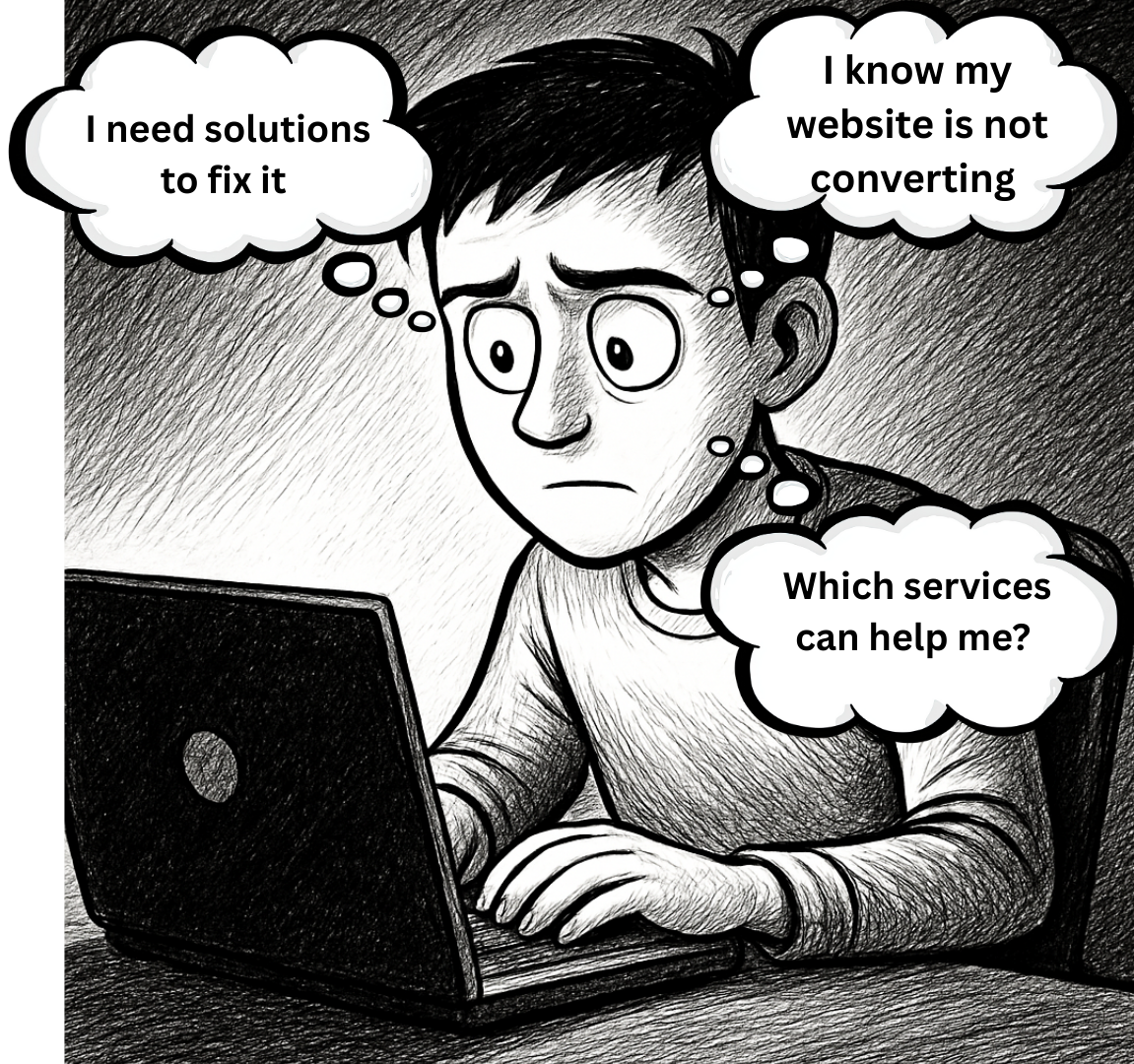
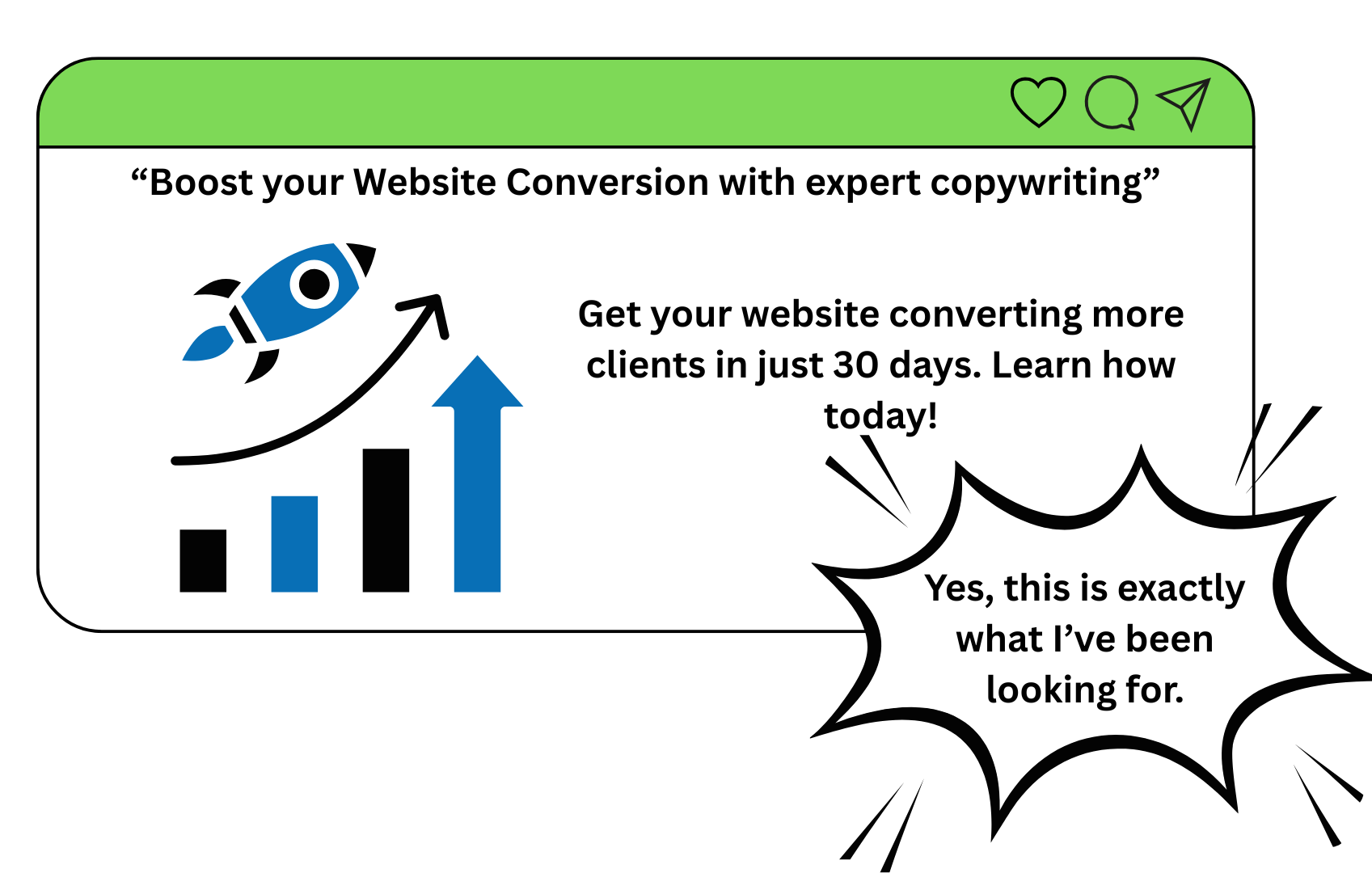
In this visual, the prospect represents someone who is solution-aware. They have already identified the problem and are actively seeking a way to fix it. Their focus is no longer on recognizing the issue, but on evaluating options and deciding which solution will work best.
Unlike ads targeting unaware or problem-aware prospects, the ad above presents the product or service as the clear solution, highlighting benefits, features, and next steps. The goal is to guide the prospect toward taking action such as signing up, purchasing, or scheduling a consultation.
4. Product-Aware Stage
At this stage, the prospect already understands their problem and knows the type of solution they need. Now, they are actively searching for a specific product or service that can solve it.
They begin researching, comparing, and evaluating different options to find the one that best fits their needs. This is where brand positioning, product differentiation, and clear value propositions become crucial.
Now, the prospect has moved from “I need a solution.” to “I’m deciding which product or service is right for me.”
Marketing at the Product-Aware Stage should:
- Highlight what makes your product or service unique
- Provide clear proof of results or effectiveness
- Help the prospect confidently choose your offer over competitors
The goal is to move the prospect from simply exploring their options to deciding on a particular product or service.
The visual below illustrates how a product-aware prospect evaluates choices, and how an effective product-focused ad positions itself as the right solution.
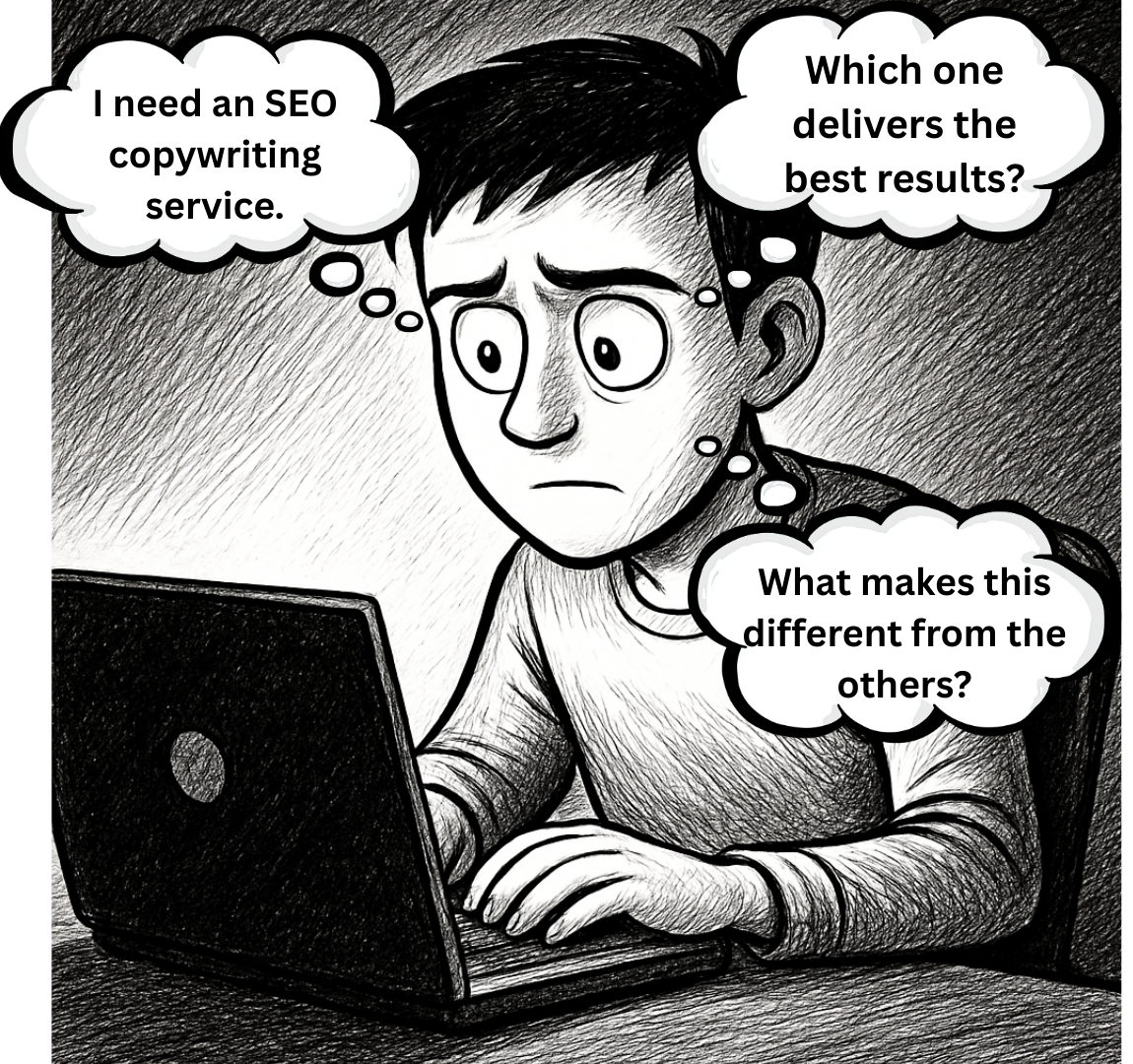
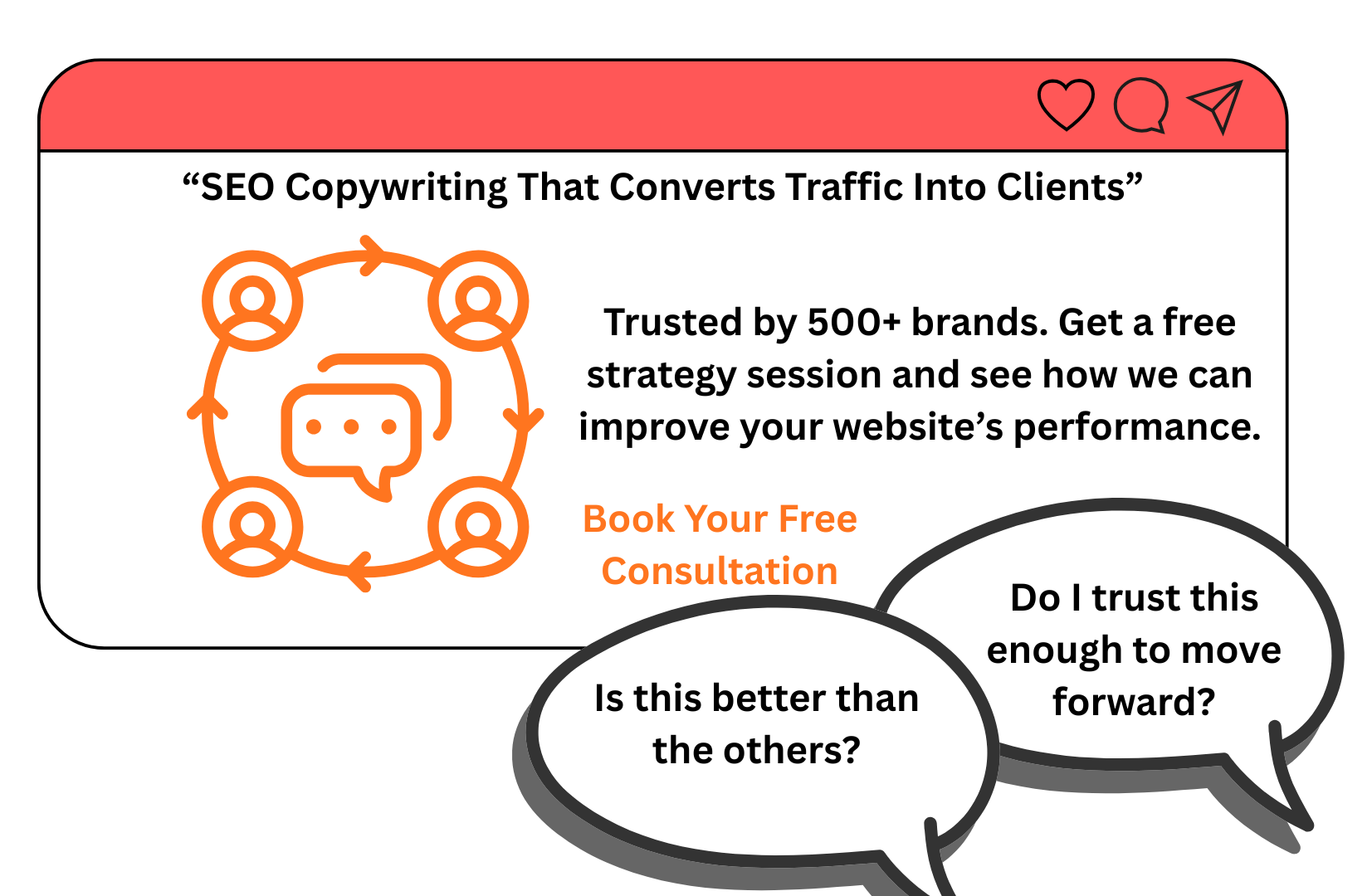
In this visual, the prospect on the left represents someone who is product-aware. They already understand their problem and know the type of solution they need. Their focus has now shifted to choosing the right product or service among available options.
Instead of introducing the problem or explaining how solutions work, the ad highlights a specific product or service, emphasizing its unique benefits, credibility, and value. The goal is to help the prospect feel confident in selecting this offer over competitors.
5. Most Aware Stage
At this point, the prospect is fully informed. They know their problem, understand the available solutions, and are already familiar with the specific product or service. The only thing left is deciding when to take action.
Marketing at the Most-Aware Stage should focus on:
- Providing final reassurance and trust-building elements
- Highlighting urgency or scarcity to prompt immediate action
- Offering clear calls-to-action that lead to conversion
This is where offers such as limited-time bonuses, guarantees, testimonials, case studies, or clear pricing become especially effective.
The visual below illustrates how a most-aware prospect thinks and how an effective ad speaks directly to their readiness to buy.
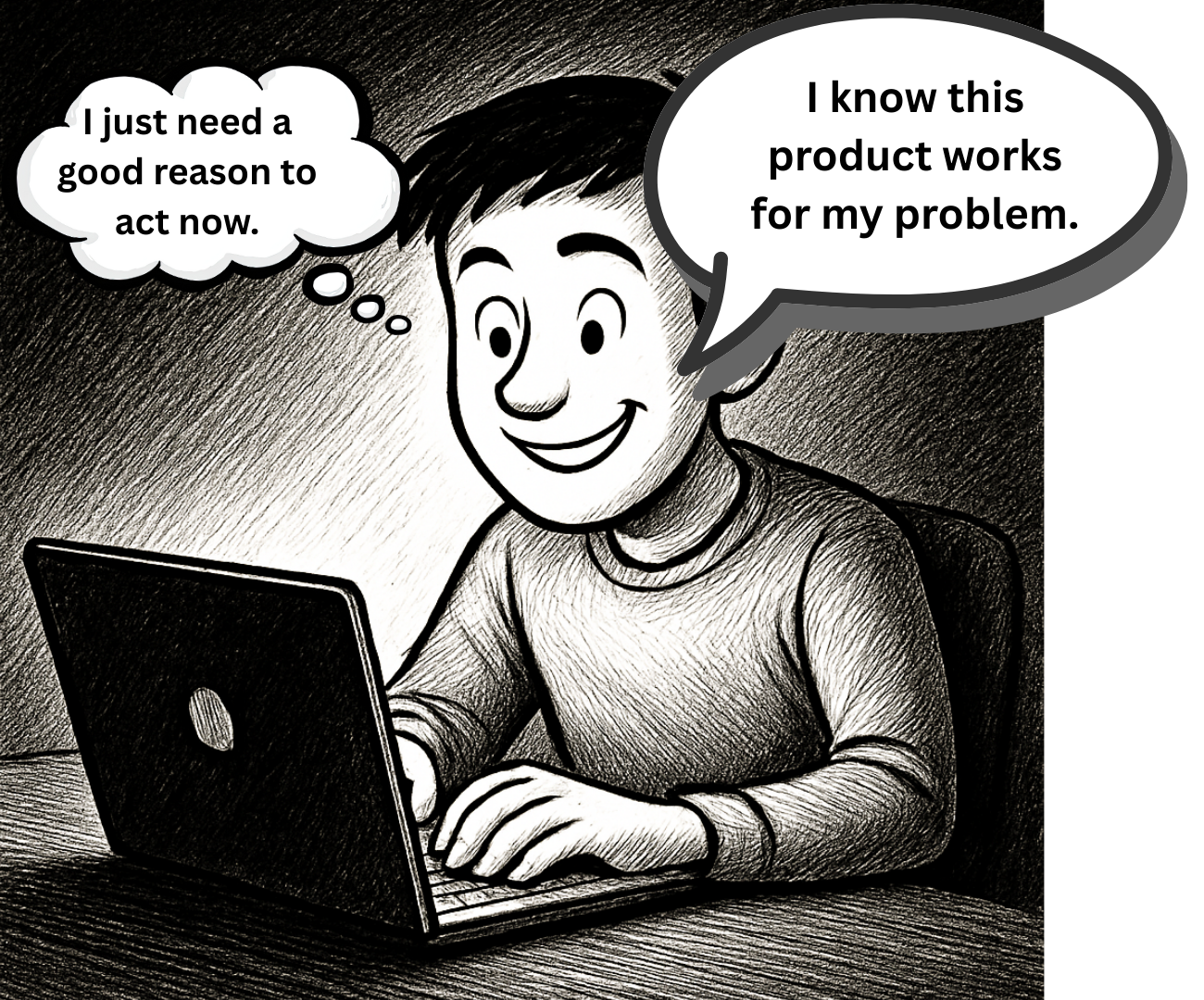

In this visual, the prospect represents someone who is fully aware of the product and its benefits. They no longer need education or comparison; they are ready to act but may need final reassurance, trust signals, or urgency to make a decision.
Instead of explaining features or comparing products, it emphasizes credibility, guarantees, and a clear call to action. The goal is to reduce hesitation and push the prospect toward immediate action, whether that is signing up, purchasing, or booking a consultation.
Conclusion: Mastering the Awareness Ladder
Understanding the different stages of prospect awareness is essential for crafting marketing that actually converts. Each stage represents a distinct mindset and requires a tailored approach:
- Unaware: Prospects don’t know they have a problem. Focus on experiences or symptoms to spark recognition.
- Problem-Aware: Prospects recognize the problem but aren’t sure how to solve it. Ads should educate and guide toward solution types.
- Solution-Aware: Prospects know the type of solution they need and are evaluating options. Marketing should clearly present your solution and show how it addresses their problem.
- Product-Aware: Prospects are comparing specific products or services. Highlight your unique features, proof, and credibility to stand out from competitors.
- Most-Aware: Prospects know your product and are ready to act. Reinforce trust, create urgency, and make it easy for them to take the next step.