

You may have spent time in marketing or freelancing spaces and come across people talking about lead magnets. The term may sound technical, but the idea behind it is actually quite simple.
In this article, we’ll break down what a lead magnet is, why businesses use it, and how it fits into content and SEO strategies.
What is a Lead Magnet?
A lead magnet, also known as gated content is something valuable that a business offers in exchange for a person’s contact information—usually an email address. In simple terms, it is a free resource content that users can access after providing their information.
For example, if someone wants to access a guide on how to make their food taste better, they are often asked to provide their email address before they can view or download the content. In this case, the guide itself is the lead magnet, while the email form is simply the method used to collect contact information.
Here are some of the common types of Lead Magnets:
- Checklists
- Guides / ebooks
- Free email courses
- Webinars
- Templates
Why Lead Magnets matter?
Lead magnets matter because they help businesses connect with their audience in a more meaningful way. Instead of relying on one-time website visits, businesses use lead magnets to encourage users to stay connected through email or other communication channels.
By offering something valuable upfront, businesses build trust and show their expertise before promoting products or services. This approach allows them to nurture relationships over time, making marketing efforts more effective and sustainable.
When unaware prospects see an awareness-stage ad, their typical reaction is curiosity, not an immediate action.
They relate to the symptoms described, begin recognizing the real problem, and are more likely to engage with an educational lead magnet rather than a direct product offer.
So instead of selling a product right away, focus on the everyday experiences or frustrations your prospects are already feeling. The goal at this stage is to help them recognize that a problem exists before introducing any solution.
How Lead Magnets work in a business?
To better understand how lead magnets work in practice, here’s a simple breakdown of the process businesses usually follow.
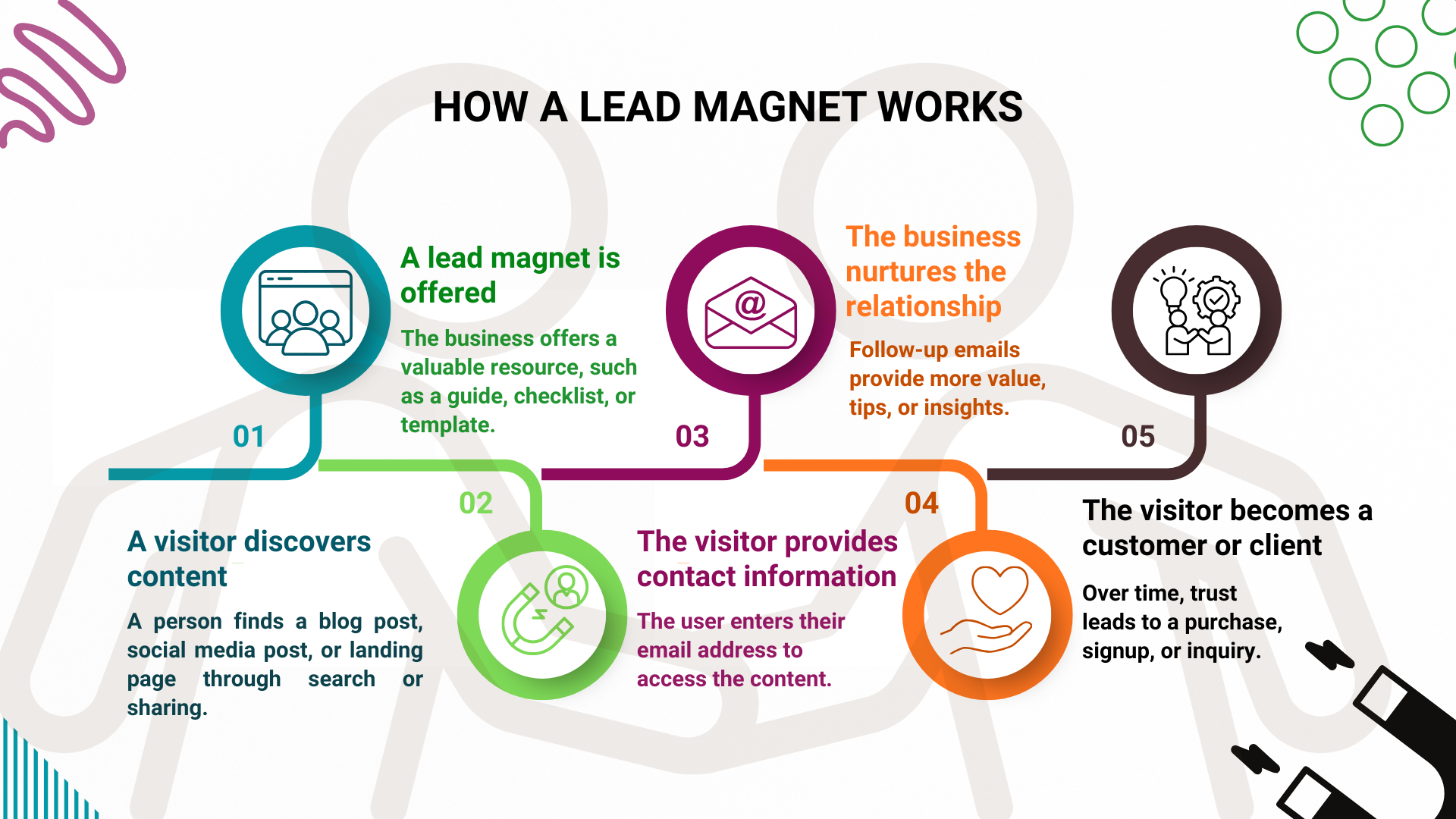
The chart above illustrates how a lead magnet captures a user’s interest and converts it into a potential contact for a business. Now that we understand the process, let’s look at how Lead Magnets support content and SEO (Search Engine Optimization).
How Lead Magnets support content and SEO (Search Engine Optimization)?
Lead magnets don’t just capture leads—they also give your content and SEO a serious boost. Here are some of the best ways lead magnets can help your website rank higher and engage your audience:
Lead magnets help capture leads by offering valuable content that solves real problems aligned with the audience’s needs and interests. By delivering relevant and actionable solutions, businesses increased visibility, attract targeted traffic, and encourage meaningful engagement.
Lead magnets increase content sharing, which indirectly supports SEO by boosting visibility, driving traffic, and leading to backlinks over time. Their high shareability comes from the tangible value they provide—useful resources that people are willing to share with others.
An effective lead magnet increases reader engagement by keeping users on the page longer. Higher dwell time and lower bounce rates send positive behavioral signals, which can indirectly support search rankings. When content is useful and engaging, readers take the time to explore the page and are more likely to download the resource.
Lead magnets support keyword targeting beyond blog posts by targeting transactional, problem-focused, and long-tail search queries. Examples include keywords such as “SEO checklist” or “content calendar template.” By ranking for a broader range of keywords, lead magnets expand a site’s keyword footprint, increasing organic visibility and reinforcing topical authority.
Lead magnets earn natural backlinks by offering high-value resources that other websites want to reference. Backlinks are created when one website links to another, and resources such as free tools, templates, original content, and research summaries are particularly link-worthy. Because backlinks remain a major ranking factor in SEO, lead magnets provide a compelling reason for other sites to link organically, strengthening a website’s authority and search visibility.
Lead magnets improve internal linking structure by serving as internal link hubs. They can be linked from multiple blog posts using descriptive anchor text, helping strengthen topical clusters. This allows search engines to better understand page importance, content relationships, and site structure, improving crawlability and authority flow.
Together, these strategies show how lead magnets do more than just capture emails—they enhance user engagement, improve SEO performance, and establish a website’s authority. By combining value for your audience with smart optimization techniques, lead magnets create a strong foundation for attracting the right visitors and turning them into loyal leads. With these benefits in mind, let’s review the key takeaways.
Key takeaways
Lead magnets are powerful tools that do more than capture leads—they provide real value, solve audience problems, and strengthen your website’s SEO. By increasing engagement, expanding keyword coverage, improving internal linking, boosting content shareability, and generating backlinks, lead magnets help businesses attract the right audience and build authority online. When created thoughtfully, they serve as a bridge between valuable content and meaningful conversions, making them an essential part of any digital marketing strategy.